A Caracas guide, by experience

Four thematic hubs and a planner for your free day in Caracas.

Browse by hub

Right now in Caracas

Dated, sourced facts checked by this project — not a live feed.

This block was last reviewed on August 11, 2026.

  • Airport (Maiquetía)

    Recently verified

    Simón Bolívar International Airport's only runway pair remains closed for resurfacing (NOTAM CO765/26). Cargo operations resumed on August 5, 2026 using an alternate runway configuration, per El Nacional. For commercial passenger flights, a test phase is planned for August 17–21, with a partial reopening from August 24, 2026 — an initial phase of around 8 daily flights operating out of provisional tents, with no companions allowed inside and shops/restaurants still closed — and full airport rehabilitation remains targeted for December 2026.

    View source and date

    Source: El Estímulo

    Published: July 27, 2026

    Checked by this project: August 11, 2026
  • Caracas Metro

    Recently verified

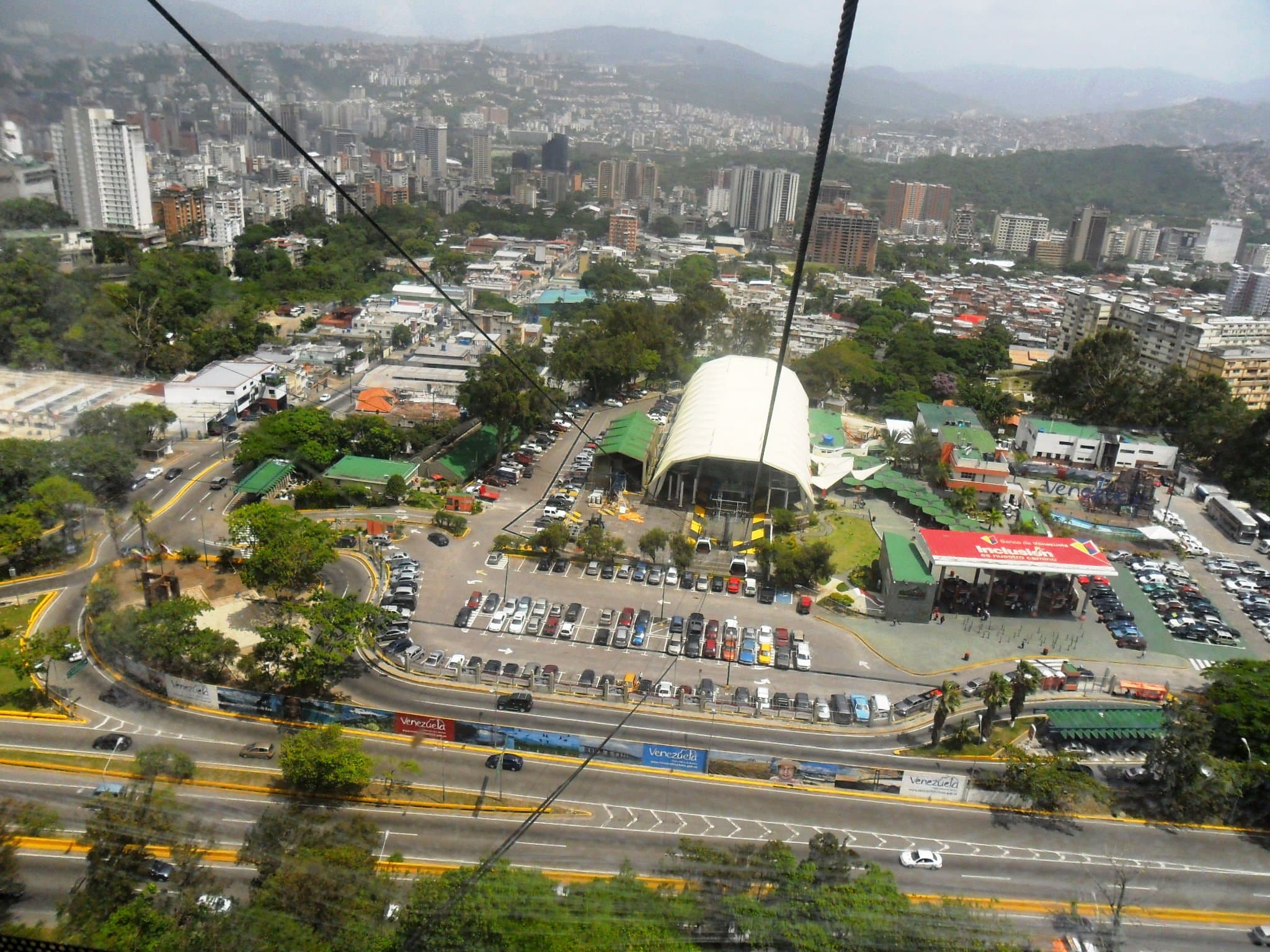
    The Caracas Metro's main lines were restored on June 28, 2026, and Metrocable (the cable-car systems) resumed service on July 15, 2026, after completing post-earthquake traction and control tests.

    View source and date

    Source: El Nacional

    Published: July 15, 2026

    Checked by this project: August 11, 2026
  • State of emergency

    Recently verified

    The government declared a nationwide state of emergency on June 24, 2026 via Decree No. 5.364, published in the Official Gazette (Gaceta Oficial) Extraordinary Issue No. 7.039 of that same date, designating a single "Authority" for the seismic response. No lifting date has been announced. This decree is distinct from the pre-existing economic-emergency state of exception in effect before the quake, and also distinct from the state of external commotion declared in January 2026 — these should not be confused with one another.

    View source and date

    Source: Gaceta Oficial Extraordinaria N.º 7.039 (vía tugacetaoficial.com)

    Published: June 24, 2026

    Checked by this project: August 11, 2026
  • Travel advisory — United States

    Recently verified

    The U.S. State Department keeps Venezuela at Level 3, "Reconsider Travel" (issued June 27, 2026), now adding the earthquakes to its existing reasons — crime, kidnapping, terrorism, health care; several border areas and states remain at Level 4, "Do Not Travel." Some outlets reported a possible countrywide escalation to Level 4 in early August 2026, but the official Travel.State.gov page, checked directly on August 11, 2026, still showed Level 3 with no such change reflected.

    View source and date

    Source: U.S. Department of State — Travel.State.gov

    Published: June 27, 2026

    Checked by this project: August 11, 2026

  • Ávila / Waraira Repano access

    Recently verified

    A joint technical commission from Inparques and the Venezuelan Society of Geologists concluded, around July 10, 2026, that the Waraira Repano massif suffered no structural damage from the earthquakes — the landslides observed were classified as superficial vegetation-layer shedding, an expected response to a quake of this magnitude. The Galindo and Sabas Nieves 1 access points and the Chacaíto–Papelón stretch remain operational under constant surveillance; La Julia, Sabas Nieves 2, Fila Maestra, and the high-mountain zone remain closed. The physical condition of the cable car and Hotel Humboldt remains unconfirmed by any source.

    View source and date

    Source: El Nacional (comisión técnica Inparques / Sociedad Venezolana de Geólogos)

    Published: July 10, 2026

    Checked by this project: August 11, 2026

  • Death toll

    Recently verified

    At least 6,301 people confirmed dead, per the official tally announced August 10, 2026 by National Assembly President Jorge Rodríguez — 176 more than the prior tally of 6,125 from August 3. Missing-person estimates vary widely and there is still no official figure: La Guaira's state governor cited 1,579 missing on August 3 (scope unclear — possibly limited to that state), while the independent citizen-run registry ("Desaparecidos Terremoto Venezuela") had logged 44,418 reports, with about 29,518 people still unreachable, per early-August press coverage; none of these figures have been reconciled with one another.

    Earlier figure, for comparison

    Progression of earlier official tallies, for contrast: 235 (Jun 26) → 4,490 (Jul 12) → 4,829 (Jul 15) → 5,208 (Jul 19) → 5,346 (Jul 22) → 5,546 (Jul 24) → 6,125 (Aug 3) → 6,301 (Aug 10).

    Infobae — registro Desaparecidos Terremoto Venezuela — Published: August 7, 2026

    View source and date

    Source: Infobae

    Published: August 10, 2026

    Checked by this project: August 11, 2026

  • Electricity and water

    Recently verified

    In La Guaira, the state hit hardest by the earthquakes, electricity was reported 96–98% restored and drinking water 84% restored by mid-July 2026, with tanker trucks covering the remainder. Separately from the earthquake, on August 2, 2026 the government activated a national electricity- and water-saving plan amid a broader grid crisis; several states reported 4–12 hour outages, and Caracas itself saw reported power fluctuations and outages in multiple sectors (El Recreo, La Pastora, Plaza Venezuela, Sarria, La Florida, among others) in early August, with protests over the rationing plan on August 4. In short: La Guaira's earthquake-specific recovery doesn't mean supply in Caracas itself is currently stable.

    View source and date

    Source: Infobae

    Published: August 4, 2026

    Checked by this project: August 11, 2026

Official channels coordinating the response to the June 24, 2026 earthquakes. This site doesn't collect funds or handle donations — it only links to verifiable organizations.

Browse by hub

Day-off planner