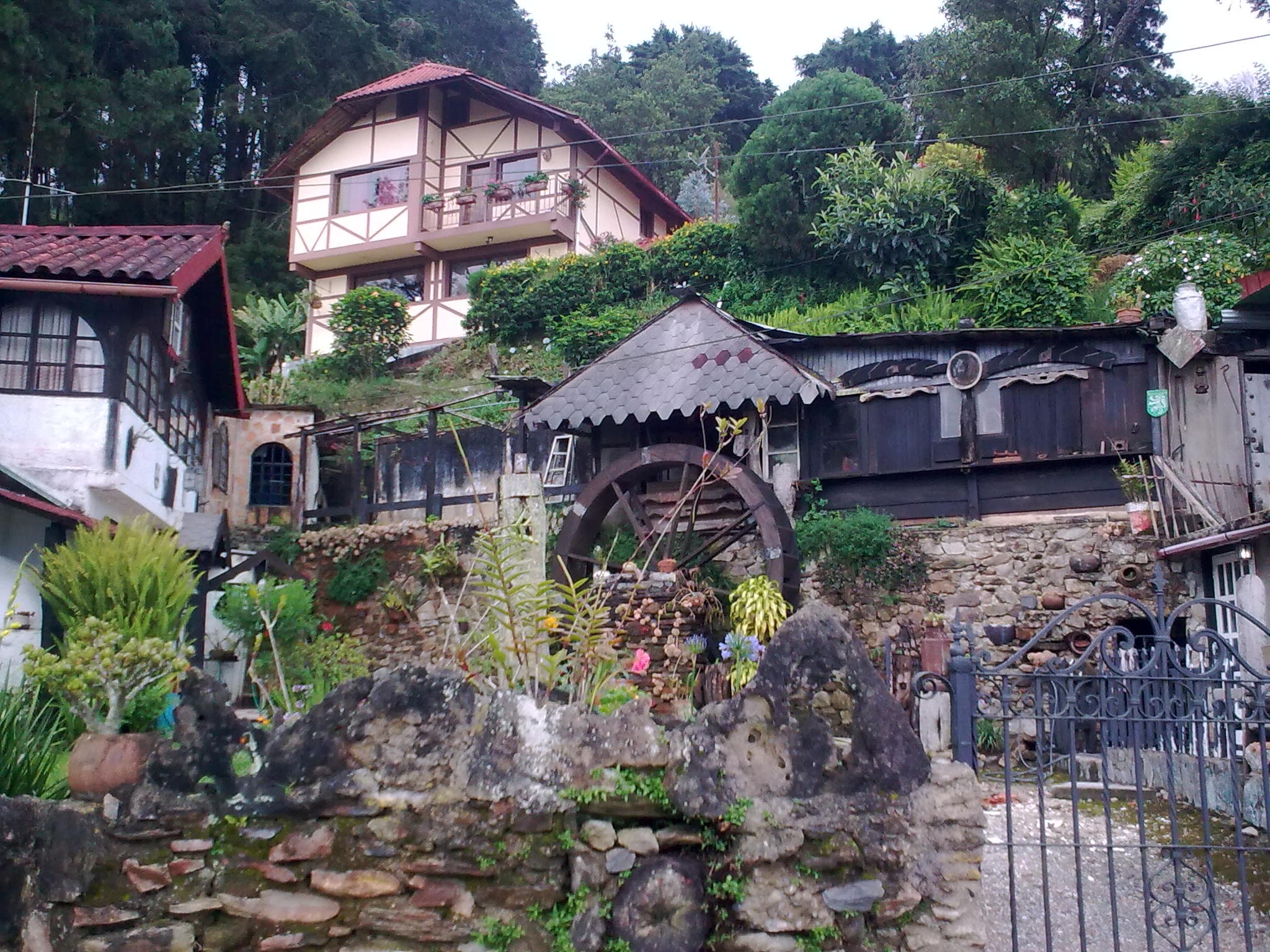
Photo: NoonIcarus, CC BY-SA 3.0

Day trips
Three very different day trips are within reach of Caracas: a German mountain town, a colonial port coast, and one of the Caribbean's largest marine parks.
Colonia Tovar
Colonia Tovar was founded on April 8, 1843, by roughly 390 immigrants from the Grand Duchy of Baden, organized by the geographer Agustín Codazzi after he identified a site in Venezuela's coastal mountains with a climate similar to the settlers' home region. The town sits in Aragua State, in the Cordillera de la Costa, at an elevation of roughly 1,800–2,000 meters — high enough for a noticeably cooler, subtropical highland climate than Caracas.
The settlers built in the style of their home region, and that character has been preserved: chalet-style buildings with steep, often red roofs, and a parish church, San Martín de Tours, built as a copy of the church in Endingen, Germany. A German-based dialect known as Coloniero is still spoken in the town alongside Spanish. Tourism has been the town's main economic activity since the 1960s, alongside agriculture — strawberries, peaches, vegetables and flowers grow well at this elevation — and an annual Oktoberfest reflects the same heritage.
La Guaira and the Litoral coast
La Guaira has served as the port for Caracas since the colonial era, sitting on a narrow coastal shelf at the foot of the same mountain range — the Cordillera de la Costa, crowned by El Ávila — that separates the coast from the capital. It withstood a naval attack during the War of Jenkins' Ear in 1743 and was damaged by an 1812 earthquake and an 1822 hurricane; it remains Venezuela's second-largest port after Puerto Cabello.
The Caracas–La Guaira highway, built between 1950 and 1953, cut the trip between the coast and the capital from around an hour to about 20 minutes, and also serves Simón Bolívar International Airport in Maiquetía. Beyond La Guaira itself, the wider Litoral Central — Macuto, Caraballeda, Catia La Mar and a string of smaller parishes — is the closest stretch of Caribbean coastline to Caracas.
La Guaira and the Litoral were among the areas most affected by the June 24, 2026 earthquakes. This section describes the region as geographic and historical context, not as an active travel recommendation: current access and the status of the specific sites listed below has not been officially confirmed in every case — see each object's own page and "Right now in Caracas" on the homepage before planning any visit.
Los Roques
Los Roques Archipelago National Park, established in 1972, is one of the largest marine parks in the Caribbean — around 2,200 square kilometers of coral atoll roughly 130 km north of Caracas and La Guaira. Made up of dozens of islands and cays around a lagoon, the park has Ramsar wetland status and one of the best-preserved reef systems in the Caribbean, home to more than 300 documented fish species. Gran Roque is the only permanently inhabited island, home to around 1,200 people and the archipelago's small airstrip.
Most visitors reach Los Roques by air from Caracas; a passenger ferry from La Guaira has also run in recent years, though Venezuelan ferry services have a history of interruption — worth confirming current status directly rather than assuming a fixed schedule.
Updated — 8/4/2026
Content researched and verified by the Caracas Virtual team. See methodology